


J-HV-PC-S-W1502001601
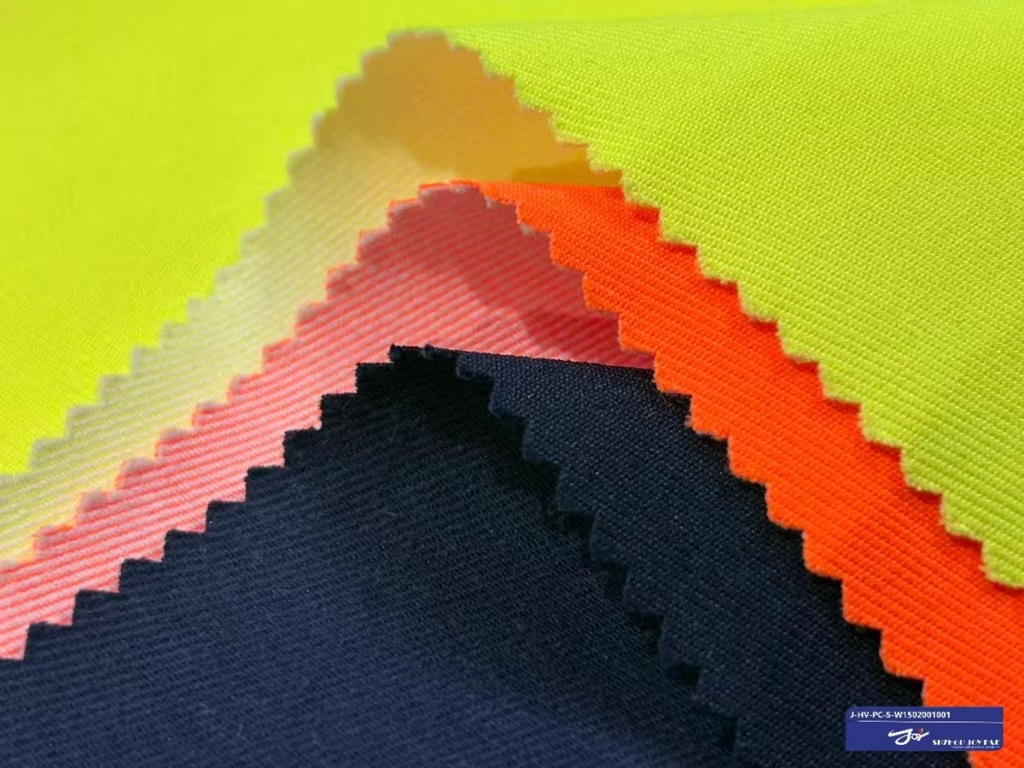
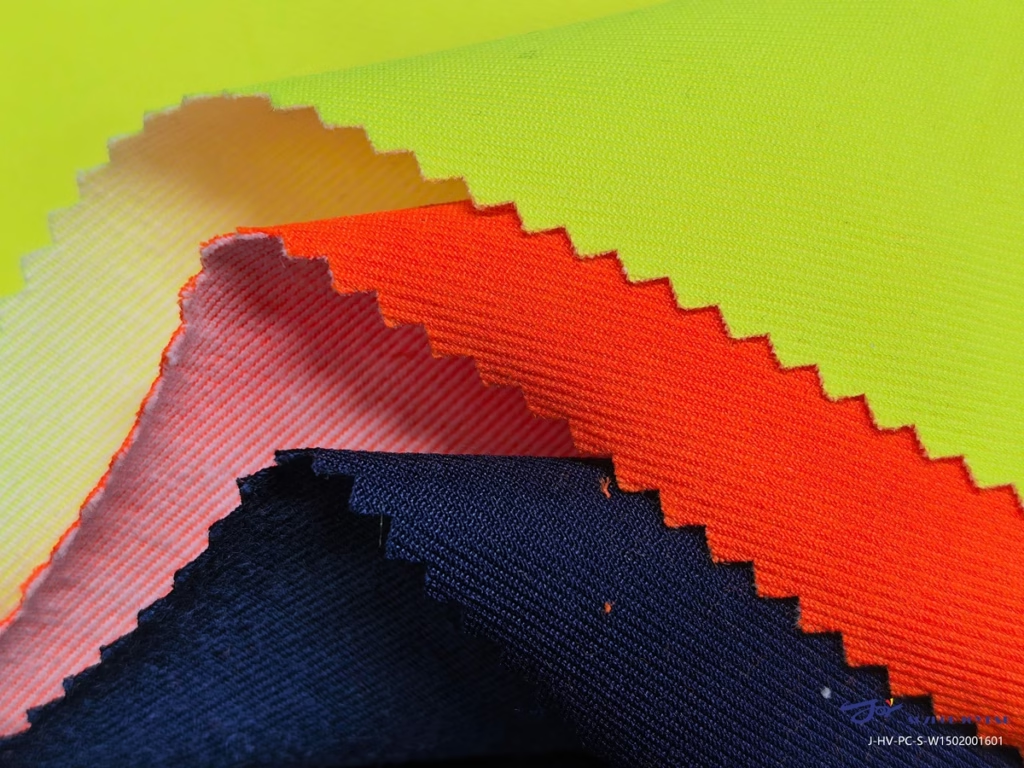
Poly-Cotton Spandex Stretch Workwear Fabric with Dobby Twill Construction – 250 gsm
A 250 gsm poly-cotton dobby twill fabric containing 3% spandex for two-way stretch, with a water-repellent finish, developed for professional workwear and selected high-visibility garment applications.
- Composition
- 60% Polyester / 37% Cotton / 3% Spandex
- Weight
- 250 gsm ±5%
- Usable Width
- 148 cm
- Construction
- Dobby Twill
- Treatment
- WR
- Care Instructions
- Poly-Cotton Spandex Blend
- Two-Way Stretch Construction
- 250 gsm Dobby Twill
- WR Treatment
- High Tensile Strength: 1,453 N Warp
Overview
This poly-cotton spandex fabric offers a 250 gsm alternative within the dobby twill workwear range, combining two-way stretch with a polyester-rich blend. Compared with heavier constructions, it provides buyers with another weight option when evaluating fabric substance, flexibility and garment design requirements.
The WR treatment adds a water-repellent finishing option for workwear exposed to occasional surface moisture. Selected high-visibility garment applications may also be considered, subject to colour-specific test evidence, laundering conditions and finished-garment compliance requirements.
Performance & Standards
Reported laboratory results cover tensile and tear strength, dimensional stability, colour fastness and moisture-related thermal properties. The selected measurements below provide technical reference points for evaluating this fabric in professional workwear development.
Key Test Results
| Property | Test Method | Reported Result |
|---|---|---|
| Tensile Strength | EN ISO 13934-1:2013 | Warp: 1,453 N; Weft: 697 N |
| Elongation at Break | EN ISO 13934-1:2013 | Warp: 56%; Weft: 83% |
| Tear Strength | EN ISO 13937-2 | Warp: 52 N; Weft: 63 N |
| Dimensional Stability After Five Washes | EN ISO 6330, 40°C, tumble dry | Warp and weft: reported as <±3% |
| Colour Fastness to Laundering | EN ISO 105-C06:2010 | Grade 4 for colour change and staining on polyester and cotton |
| Colour Fastness to Perspiration | EN ISO 105-E04:2013 | Grade 4 for alkaline and acid staining on polyester and cotton |
| Colour Fastness to Dry Rubbing | EN ISO 105-X12:2016 | Grade 4 |
| Water Vapour Resistance (Ret) | EN ISO 11092:2014 | 5.69 m²·Pa/W |
| Thermal Resistance (Rct) | EN ISO 11092:2014 | 0.025 m²·K/W |
| Water Vapour Permeability Index (imt) | EN ISO 11092:2014 | 0.27 |
Testing Notes
The TDS also reports conformity for EN ISO 20471:2013/A1:2016 colour coordinates and luminance when new, after 25 washes and after xenon exposure. These fabric-level findings do not establish compliance for every colourway or certify finished garments. Reported performance may vary between articles. Abrasion and pilling methods are listed without results; underlying reports and certification scope should be confirmed where required.
Applications
Recommended Applications
Industrial Workwear Trousers
A candidate for work trousers where buyers require a poly-cotton fabric with two-way stretch and a 250 gsm weight specification. Garment fit, movement requirements and reinforcement details should be assessed during development.
Workwear Jackets
Suitable for evaluation in workwear jacket designs that call for a dobby twill construction and a water-repellent finish. The WR treatment is intended for occasional surface moisture rather than sustained rain protection.
Workwear Coveralls
Can be considered for coverall development where stretch and fabric weight are relevant to garment construction. Suitability should be assessed against the intended working environment and finished-garment requirements.
High-Visibility Workwear Panels
May be considered for selected high-visibility garment panels where the relevant fabric colour has supporting test evidence. Colour compliance, panel placement and the performance of the completed garment require separate verification.
Selection Considerations
Buyers should assess the 250 gsm construction against garment weight, flexibility and durability requirements. WR finishing should not be treated as waterproof protection. For high-visibility applications, confirm the specific colourway, applicable test evidence and finished-garment requirements before specifying the fabric. Request additional testing where the intended use requires performance not established by the available TDS.


Take the Next Step with This Fabric
Request a fabric sample or technical documentation to support your material evaluation.