


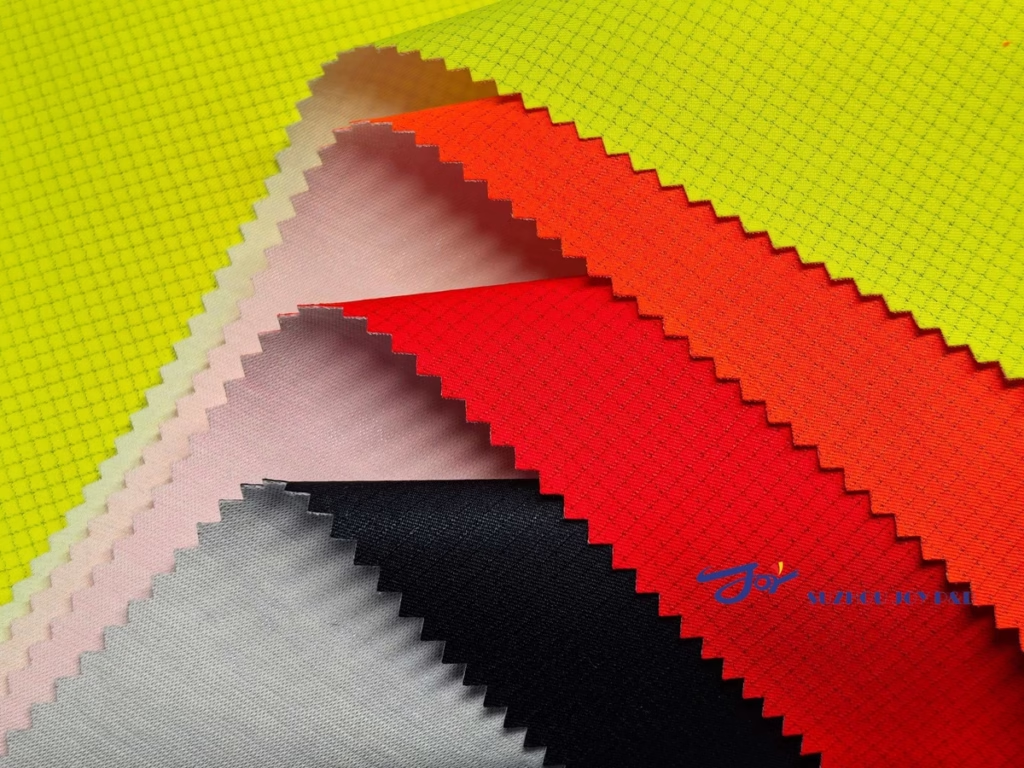
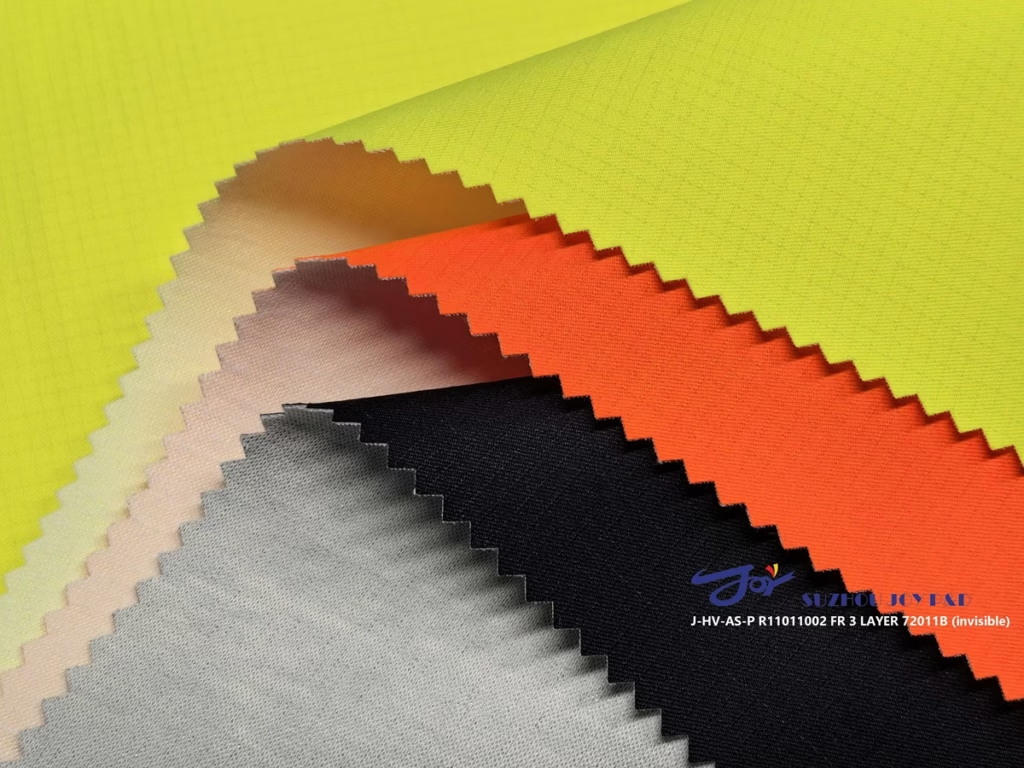
J-HV-AS-P R11011002 FR 3 LAYER B
Multi-Norm Flame Retardant Hardshell Fabric with Invisible Anti-Static
A three-layer multi-norm flame-retardant hardshell fabric with an invisible anti-static construction, a polyester/carbon outer shell, PU membrane and flame-retardant inner layer, developed for protective outerwear.
- Composition
- Shell: 98% polyester, 2% carbon; Inner layer: 55% modacrylic (Protex), 37% cotton, 8% aramid
- Weight
- 280–300 gsm (±5%)
- Usable Width
- 56/57 inches (approx. 142–145 cm)
- Construction
- Twill rib
- Treatment
- WR-FR BR PU membrane-FR knit
- Care Instructions
- Invisible Anti-Static Construction
- Three-Layer Protective Hardshell
- Multi-Norm Flame Retardant Performance
- Tested Electric Arc Protection
- Stretchable Protective Fabric
Overview
Designed for multi-norm protective outerwear, this three-layer flame-retardant hardshell fabric combines a polyester/carbon outer shell, a PU membrane and a flame-retardant inner layer. Its invisible anti-static construction distinguishes this version within the fabric range, while the stretchable construction is intended to support comfort and mobility.
Developed for protective jackets, rainwear and outer layers, the fabric brings together flame-resistant, anti-static, electric arc and weather-protection characteristics for work environments where multiple hazards must be considered. Its layered construction provides a practical material option for protective outerwear development.
Performance & Standards
This three-layer flame-retardant hardshell fabric has been evaluated for multiple protective performance requirements, including flame and heat exposure, electric arc hazards, electrostatic properties, limited liquid chemical protection, water penetration resistance and high-visibility colour performance.
Key Test Results
| Standard | Performance Area | Reported Test Results |
|---|---|---|
| EN ISO 11612:2015 | Protection against heat and flame | Limited flame spread A1+A2; convective heat B1; radiant heat C1; molten aluminium splash D2; molten iron splash E3; contact heat F1 |
| EN ISO 11611:2015 | Protective clothing for welding and allied processes | Limited flame spread A1+A2; radiant heat Class 2; molten metal splash Class 2 |
| EN 61482-2:2020 | Electric arc protection | APC 1 under EN 61482-1-2:2014 |
| IEC 61482-1-1:2019 | Electric arc thermal performance | ATPV 13 cal/cm²; ELIM 9.8 cal/cm² |
| EN 1149-5:2018 | Electrostatic properties | Charge decay half-time t50 <0.01 s; shielding factor S = 0.9 |
| EN 13034:2005+A1:2009 | Limited liquid chemical protection | 0% penetration reported for 30% sulfuric acid, 10% sodium hydroxide, o-xylene and 1-butanol under the specified test conditions; reported penetration index P3 |
| EN ISO 24232:2025 | Water penetration and water vapour resistance | Water penetration resistance >20,000 Pa, Class 4, including after 25 wash cycles and specified durability tests; water vapour resistance Ret 14.3 m²·Pa/W, Class 4 |
| EN ISO 20471:2013+A1:2016 | High-visibility colour performance | Reported PASS for fluorescent yellow, orange and red colour testing; navy marked N/A |
| RIS-3279-TOM:2016 | Railway high-visibility orange | Reported PASS for the tested high-visibility orange material |
Testing Notes
Results are based on the supplier’s technical data sheet referencing third-party laboratory reports. Many reported tests include pretreatment of 25 wash cycles at 60°C with tumble drying. Results may vary by material version, colour and production batch. The reported classifications apply to the tested material and conditions; they do not establish certification or compliance of a finished garment.
Applications
Potential Applications
This fabric is intended for the development of multi-norm protective outerwear where weather protection needs to be considered alongside flame, heat, electrostatic and electric arc hazards.
Potential applications include:
- Multi-norm protective jackets and outer shells — for industrial workwear programmes requiring a combination of protective performance characteristics.
- Flame-retardant protective rainwear — for outdoor work environments where resistance to water penetration and relevant protective properties are required.
- Protective outerwear for electrical and industrial maintenance — where electric arc exposure and other workplace hazards form part of the garment selection criteria.
- High-visibility protective outerwear — where the selected fabric colour, reflective components and finished garment design can be assessed against applicable visibility requirements.
Material Selection Considerations
- Hazard assessment: Match the fabric’s reported performance to the actual workplace hazards and the applicable protective clothing requirements.
- Layered garment design: Consider the complete garment construction, including seams, closures, linings and other components that may affect protective and weather-resistant performance.
- Electric arc protection: Evaluate the reported APC 1, ATPV and ELIM results in relation to the intended garment system and required protection level.
- Electrostatic properties: The invisible anti-static construction identifies this fabric version but does not, by itself, establish suitability for every electrostatic hazard or working environment.
- Colour and visibility: High-visibility test results are colour-specific. Finished garment visibility depends on the selected material, reflective elements, garment design and applicable certification requirements.
- Testing and care: Confirm the relevant test reports, laundering conditions and finished garment requirements before final material approval.
Suitability should be verified against the intended end use and finished garment requirements. Fabric-level test results do not constitute certification of a completed protective garment.


Take the Next Step with This Fabric
Request a fabric sample or technical documentation to support your material evaluation.